By Sam Hulick · Updated August 2026
You send the reel on a Tuesday. You’d listened back one more time that morning, nudged the track order, rewritten the note twice so it read like a person and not a pitch. Then you hit send, and waited.
Wednesday, nothing. Thursday, you open your sent folder just to confirm it actually went. By the weekend you’re doing the thing every composer does, refreshing your inbox at odd hours and running the math on whether silence means “no” or “not yet” or “who is this again?”
Here’s what I wish someone had told me back when I was emailing demos into the void: silence isn’t always rejection. Sometimes it is, but some of that quiet is a “yes, but later” from someone who got buried and meant to write back. The problem is that from where you’re sitting, a “maybe” and a “no” look exactly alike. Both of them are just an empty inbox.
Analytics are how you tell them apart. When you can see how someone actually listened to your reel, you know who’s worth a follow-up and who isn’t, and you know when to send it, while you’re still fresh in their mind. You put your energy into the people who are genuinely interested, at the moment they’re most likely to answer, instead of chasing the ones who were never going to reply.
The advice everyone gives you is a stopwatch
Search “how to follow up with a music supervisor” and you’ll get the same answer on every forum, blog, and Reddit thread going back a decade. Wait two to three weeks. Send one polite note, add value, don’t be pushy.
It’s not wrong, but it treats every silence the same, as if the person who played your whole reel twice and the person who bailed four seconds in are the same lead on the same timeline, when they aren’t. One of them is interested and busy. The other one needed something you didn’t send. A calendar reminder to follow up in two weeks can’t tell you which is which.
What can tell you is the reel itself.
First question: did they even open it?
Before you agonize over what to say in your follow-up, address the real question: did they listen at all?
This is the part that generic advice can’t help with, because most of the ways composers send work—shared folders, streaming links, attachments—give you no feedback at all. You send it off and hear nothing about what happened next, so you have no idea if it got opened, or if anyone pressed play. That’s exactly why the “two week wait” advice exists. When you have no data, time is the only tool you’ve got.
There are a few platform options that can help, though. DISCO and a SoundCloud Pro account will show you the top-line numbers like plays, opens, downloads. That’s better than flying blind, but it’s the bare minimum. It tells you a track got played, not how much of it got played, or if it was replayed.
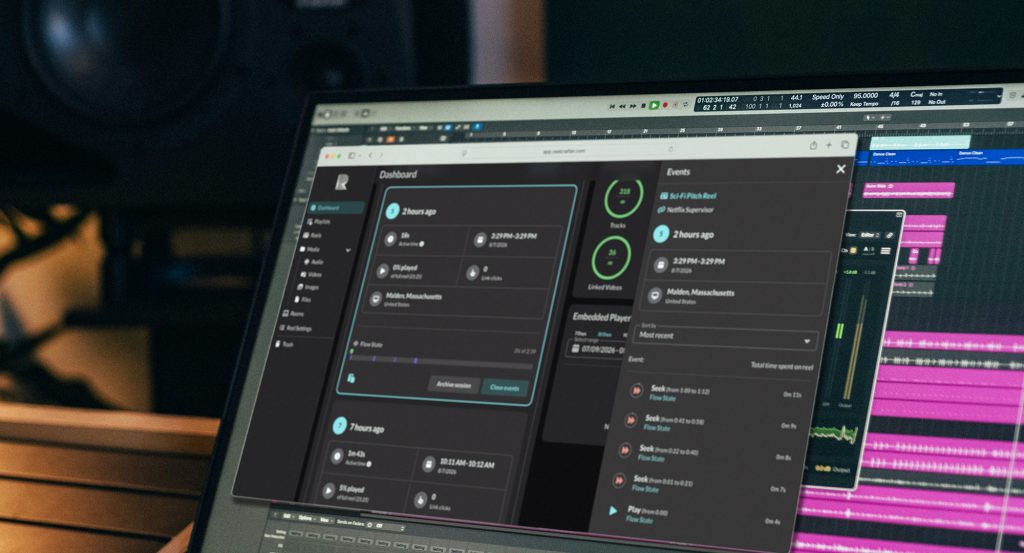
When you send a reel through ReelCrafter, you get access to all the details. You can see that someone opened it Thursday morning, played your first track start to finish, went back to the stretch around 0:45, skipped the third one, and let the fourth run to the end. That’s a picture of what caught them and what didn’t. Someone who went back to a particular cue twice is a lead, and now you know who to write to and what to point at when you do.
Someone who went back to a particular cue twice is a lead.
People rarely listen the moment your email lands. One supervisor opens your reel that afternoon, and another doesn’t get to it until they’re buried in a project three weeks later. If you simply start a two-week countdown from the day you hit send, you’ll miss the window to follow up while you’re fresh in their mind. Say someone plays your reel on day three and lingers on a couple of tracks. There’s no sense waiting another week and a half when you could reach out while it’s still warm. Seeing when they actually open it is what lets you do that. Your clock starts when they engage, not when you hit send.
Three ways people listen, and how to respond
Once you can see how someone moved through your reel, the follow-up more or less writes itself. Almost every listen falls into one of three shapes. Here’s how I read them.
One thing to keep in mind before we dive into the patterns is that every opportunity is different. Someone might love your work and still go quiet for three weeks because they’re on a deadline, traveling, or waiting on a green light that has nothing to do with you. Treat these as a way to make a smarter first move. There’s always something going on in the other person’s world that you can’t see.
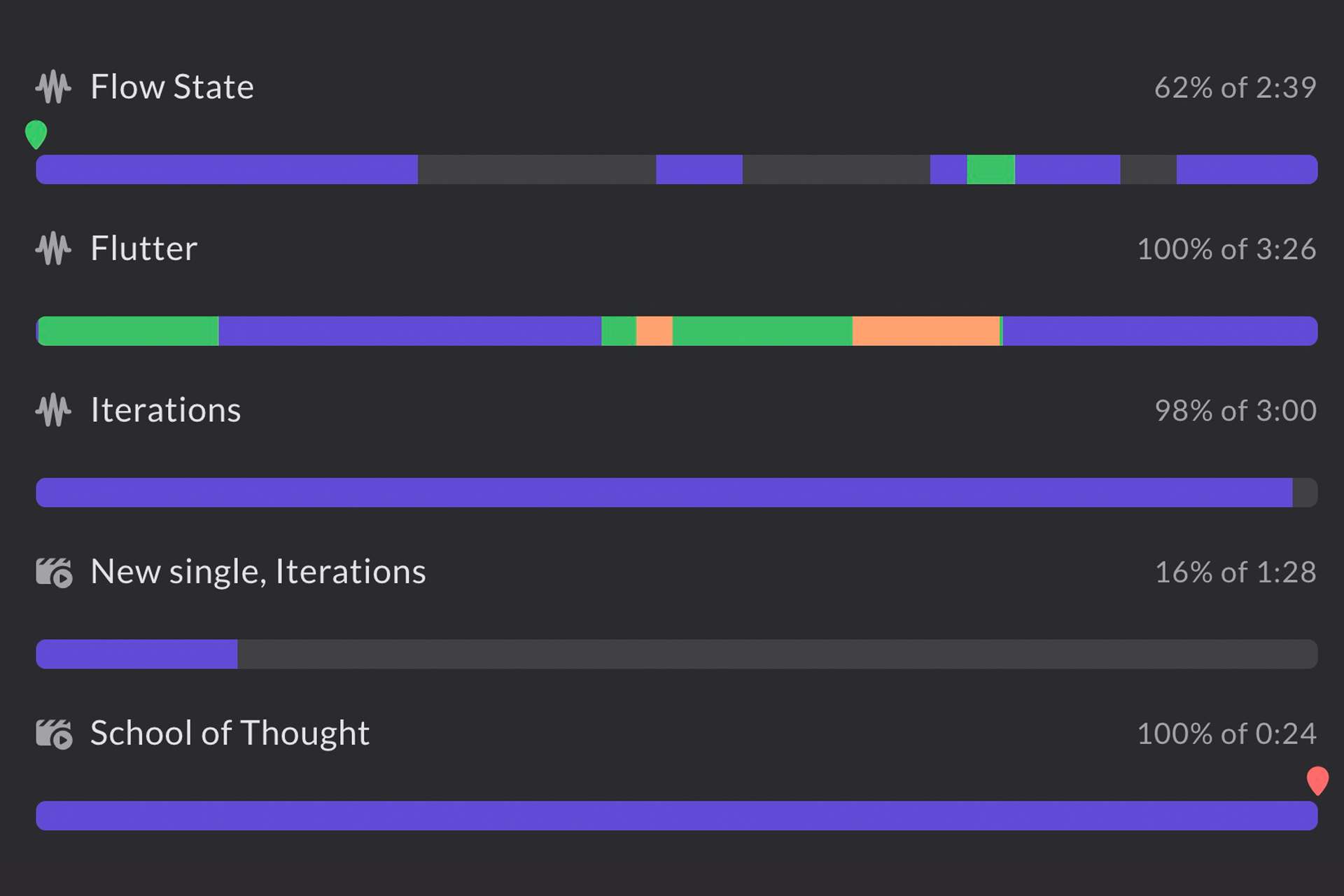
1. The deep dive: they played it through, and went back for more
The listen runs from start to finish, and a section or two got played more than once. That’s the clearest positive sign you can get! They’re interested, or one specific moment stood out to them.
The move: reach out while it’s fresh. This is an instance where moving fast makes sense. Get back to them within a day or two with a few more options in that same vein, and keep the next step small. Offer the stems, the instrumental, or a clean alternate version. The goal is to let your follow-up feel like a natural instinct rather than a reaction to their listening habits. Give them a reason to keep the conversation going.
Sample email — the deep dive
“Hi [Name], following up on the reel I sent over. I’ve got some stems and instrumental versions ready to go for those darker, string-forward cues if that direction fits what you’re working on. I can add them straight to the reel at the same link so they’re easy to find. Or, if you have a moment this week, I’d love to hear more about the direction you’re after.”
2. The quick skip: ten seconds, then gone
They opened it, gave the first track a few seconds, and dropped off or skipped out. It stings, but don’t misread it. It’s rarely a judgment on the work itself, but it’s possible the opening wasn’t the thing they needed at that exact moment.
The move: don’t come back with the same tracks and more enthusiasm. That’s the fastest way to confirm their instinct to skip. This is the one pattern where the old “give it a week or two” advice actually fits, but your follow-up still isn’t a blind bump. You come back with a genuinely different direction, swapping out the opening track for something that hits a different note entirely. Something new shows range they hadn’t seen yet, which reads a lot better than pleading for another listen of the thing they already passed on.
Sample email — the quick skip
“Hi [Name], following up on the reel I sent over. I put together a few more short pieces in a different vein—a bit more minimal and electronic—in case that direction fits your current project better. Here’s a quick five-track listen whenever you have a minute: [new link].”
3. The mid-track scanner: dropping into the middle of everything
They skipped past intros and landed the playhead in the middle of several tracks, sampling a few seconds here and there. This is a busy supervisor hunting for one specific thing, a texture, a tempo, a feeling, and scanning fast to see if you’ve got it.
The move: let their scanning tell you what to send, then make it effortless to hear. Look at where they kept dropping in. If they jumped to the same kind of moment on two or three tracks like a driving percussion break, a big brass swell, a particular synth texture, and sat on it, that’s the thing they’re hunting for.
So instead of sending more full tracks, put together a short, tight playlist that leads with exactly that element, even snippet edits that get to the point in the first few seconds. Then, make it easy to find. On ReelCrafter you can add it as a new playlist on the reel you already shared, so it’s waiting at the same link. Keep the note itself short. Someone moving through your work this fast won’t stop to read a long one anyway.
Sample email — the mid-track scanner
“Hi [Name], I added a few more short pieces to the same link, leaning into that darker, percussive side of things in case it’s closer to what you need. If there’s a specific scene or texture you’re hunting for, let me know and I can turn around a custom edit fast: [link].”
What if they never press play at all?
Sometimes the data shows nothing. No open, no play, a week goes by, then two. That reads like the worst case, but it’s usually just a different problem than the one you were bracing for. If they never heard a note, the reel isn’t what’s holding things up. Something upstream is: the email got buried, the subject line didn’t land, the timing was off, or it slipped down the pile on a busy day.
So the follow-up changes shape. Don’t wait three months hoping they wander back on their own, and don’t just resend the same note with “did you get this?” stuck on top of it. The thing that failed was getting them to open, which means your real lever is the subject line, not the pitch underneath it. Give it a fresh, specific subject that names what’s actually inside, and lead with one concrete reason to spend two minutes. A buried email gets a much better second chance that way.
Sample email — no open at all
Subject: Darker, cinematic orchestral cues
Hey [Name], I sent a short reel your way a couple of weeks back and wanted to float it up again in case it got buried: [link]. If you’re ever after a specific sound, just say the word and I’ll turn around a custom edit.
The one rule you can never break
Never let on that you were watching with a comment like “I noticed you really liked track three.” The listening data is for your confidence, for you to strategize. It’s not a thing you report back to the person who listened.
The whole point is that your follow-up reads like instinct, like someone who understands how supervisors work and sends the right thing at the right time, not someone running surveillance on an inbox. Make a supervisor feel watched and that could backfire. Send them a note that happens to land right when and how they needed it, and they’ll just think you’re good at your job. It’s the same information behind both. The only difference is that you kept what you saw to yourself and let it drive your strategy instead of the message.
Why this beats the follow-up stopwatch every time
A composer told us that the first thing they do after someone opens a reel is play through it themselves, following the other person’s path, listening from where they started to where they drifted, trying to hear what the client heard. It’s a smart instinct, and a lot of people do some version of it by hand. What the data does is make it measurable and repeatable, so you’re not reverse-engineering a listen from a gut feeling.
“Wait two weeks and send a polite bump” is what you do when you can’t see anything. Once you can see how someone actually engaged, following up stops being a shot in the dark and turns into something tangible. You stop wondering whether to reach out and start deciding what to send, to a person you already know paid attention.
None of this saves a reel that’s a mess, though. If yours is still coming together, the listening data only means something once the reel is built to be listened to. Start with the basics in how to build a killer music demo reel, get the order right with part two on sequencing, and steal a few ideas from Alex Pfeffer’s approach. Build it right first, then read what it’s telling you.
The follow-up is where relationships actually start
I got my break because Jack Wall heard my work at GDC’s Demo Derby and, a while later, he and BioWare brought me on board to work on Mass Effect. What I learned from that and everything after is that the first pitch is almost never where the real work comes from. The relationships that lead to repeat work are built in the follow-up. They come from being easy to work with, delivering exactly what’s needed without being asked twice, and knowing how to read the room.
You can’t do that if every silence looks identical. But when you can tell the deep dive from the quick skip from the fast scan, you stop sending “just checking in” and start sending exactly what that one person needed to hear next. That’s how a cold pitch turns into a warm one, and a warm one turns into a phone that rings again.
This works the same whether you’re following up with a music supervisor, a music director, or an indie filmmaker you sent a reel to last week. The recipient changes, but the read doesn’t.
You can’t read a heat map you don’t have
Every move in this piece depends on one thing: sending your reel somewhere that actually shows you how it was heard. That’s what ReelCrafter’s engagement tracking does, down to which parts of which tracks someone played, skipped, and went back to. Send a separate link to each person with advanced sharing options and you always know whose listen you’re looking at, so the follow-up is aimed at a real person instead of a guess.
Set that up before your next pitch and the two-week wait stops being your only tool. Start a free ReelCrafter trial, send your next reel through it, and the next time someone goes quiet, you’ll actually know what to say.
Frequently Asked Questions About Following Up With a Music Supervisor
How long should I wait to follow up with a music supervisor?
It depends on how they engaged. If someone played your reel all the way through and replayed a section, follow up within a day or two while it’s fresh. If they barely started it, give it a few days and come back with a different direction. The common “wait two to three weeks” advice is a safe default only when you have no idea whether they listened at all.
How do I know if a music supervisor listened to my demo?
If you send your reel as a plain file or a standard streaming link, you usually can’t know. If you send it through a platform with engagement tracking, like ReelCrafter, you can see when it was opened and how far into each track the person listened, which takes the guesswork out of your timing.
Should I tell a supervisor I saw they listened to my reel?
No! Never mention that you can see their listening activity. Use it privately to decide what to send and when, but write your follow-up so it reads like intuition. Pointing out that you tracked someone makes them feel watched and could harm the trust you’re trying to build.
What should I say in a follow-up to a music supervisor?
Lead with something useful, not a status check. If they engaged deeply, offer stems, an instrumental, or a quick call about their project. If they skipped early, offer a genuinely different sound. If they scanned quickly, keep it short and offer a fast custom edit. In every case, make the next step small and easy to say yes to.
How many times should I follow up before giving up?
There’s no magic number, but two or three well-spaced, genuinely useful notes are plenty. Each one should add something new, a different direction, a fresh track, a specific offer, rather than repeat “just checking in.” If you’re only nudging, you’re not giving them a reason to reply.
What if a music supervisor never opens my reel?
If you can see there’s been no open at all, the holdup is getting them to click, not the music itself. After a week or two, send a short, friendly note that resurfaces the link instead of re-pitching tracks they haven’t heard. Don’t let it ride for months hoping they come back on their own.
Does silence from a music supervisor mean no?
Not necessarily. Sometimes it does, but supervisors are also buried in submissions and juggling deadlines, so a slow reply is common even when they’re interested. If you can see that someone opened and listened to your reel, silence is far more likely to mean “busy” than “not interested,” which is exactly when a smart, specific follow-up pays off.